Meme coin trading versus holding and which pays off better in 2026
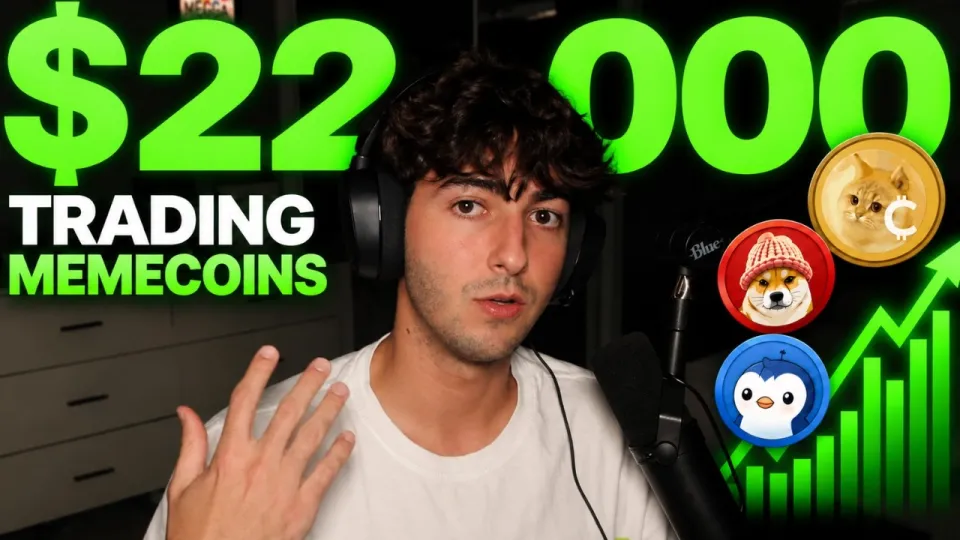
Video: How I Made $22,000 in a SINGLE Memecoin Trade (FULL GUIDE)
You can order the same kind of articles for your own video to boost it on YouTube and Google. Just message the Telegram bot @sat_sit_bot. It writes articles around your video, embeds the video and publishes them on popular niche websites (no ads). Try it free: 50 articles on us.
· based on the channel Megga
Meme coin trading beats passive holding when you have a written entry and exit plan and treat every position as money you can lose entirely; holding only makes sense for tokens with real liquidity and a product behind them. In the breakdown of his $22,000 single-trade result, Megga walks through the exact workflow he uses, from finding the token to taking profit, and points beginners to a free beginners guide on Whop before they risk any capital.
What the $22,000 meme coin trade actually shows
The headline number is a single closed position, not a portfolio return, and that distinction matters more than the figure itself. According to Megga, one well-timed meme coin trade produced roughly $22,000 in profit, and the video is structured as a full guide rather than a highlight reel: how the token was found, how the position was sized, when it was sold, and what he would repeat next time.
Three things separate that trade from a lottery ticket:
- A defined thesis before entry. The token was picked for a reason (narrative, community, launch structure), not because a chart looked green.
- Position sizing tied to the loss, not the win. The amount risked was set so that a total wipeout would not damage the rest of the bankroll.
- A pre-planned exit. Profit was taken in stages instead of waiting for a top that nobody can call in advance.
What the result does not show is the number of attempts that came before it. Meme coin trading is a hit-rate game: many small losses or break-evens, a few large winners. Anyone reading the $22,000 as an average weekly outcome is reading it wrong.
How to trade a meme coin step by step
A repeatable meme coin process starts with finding the token, checking that it can actually be sold, and only then deciding on size. The workflow below reflects the structure Megga uses in the guide, executed through a Solana trading terminal such as Padre, where chart, contract address and buy/sell buttons sit in one window.
- Source the token. Watch launch feeds, on-chain trackers and community channels for tokens that are gaining holders, not just volume.
- Verify the contract. Check mint authority, freeze authority, liquidity lock and holder distribution before buying a single unit. A token whose top ten wallets hold most of the supply is a rug waiting to happen.
- Read the chart on short timeframes. For a new meme coin, the first minutes and hours carry the information; a 1-minute or 5-minute chart plus a market cap figure is more useful than a daily candle.
- Size the position. Decide the maximum loss first, then convert it into a token amount. If a 50% drawdown would make you panic-sell, the position is too big.
- Enter in one or two clips. Chasing a vertical candle is how most beginners turn a good token into a bad trade.
- Set exit levels before the price moves. A common structure is selling a third into the first strength, a third on the next leg, and letting the remainder run with a trailing stop.
- Log the trade. Entry market cap, exit market cap, reason for exit. Without a log, the same mistake repeats.
Entry, sizing and exit rules that survive volatility
Position sizing and staged exits are the two rules that decide whether a meme coin trader survives long enough to catch a trade like the $22,000 one. Meme coins can move 80% in either direction within minutes, so the plan has to be built for that range, not for a calm market.
A practical framework:
- Risk per trade: 1–3% of the trading bankroll on a full loss, no exceptions, no averaging down into a broken chart.
- Staged selling: take initial capital out early when possible, then scale out on strength; the goal is to be playing with house money before the crowd arrives.
- Hard invalidation: a level or a market cap below which the thesis is dead, executed without negotiation.
- Liquidity check: estimate how much your sell order will move the price. A position that is too large for the pool turns paper profit into slippage.
- No leverage, no borrowed money. Meme coin volatility plus leverage is the fastest route to a zero balance.
Megga's result came from following a structure like this on one token; the structure, not the token, is the transferable part.
Why some viewers doubt the result is repeatable
The most common criticism of large meme coin wins is that they depend on the trader's network and audience, and that criticism is partly fair. A creator with a large following can post a token and watch liquidity arrive; an anonymous trader buying the same contract has no such tailwind. Megga's guide is best read as a process for finding and managing trades, not as proof that anyone can copy the exact outcome.
Other recurring questions from the audience are practical rather than skeptical: how to trade tokens launched directly from social posts, what the difference is between a profile coin and a community coin, and whether small accounts can run the same playbook. On the last point, the answer is yes, with adjusted size: a $100–$1,000 challenge run with the same entry and exit rules teaches more than watching someone else's five-figure screenshot. On the first two, the mechanics differ (a profile coin is tied to a single identity, a community coin to a group and its distribution), but the verification steps stay identical: contract checks, holder spread, liquidity depth.
Access is another real constraint. Some resources are region-locked, so a viewer in Nigeria, for example, may find a signup link that does not resolve; in that case the free written material is the place to start, and the paid tools come later.
Tools and links used in the guide
All the tools referenced in the breakdown are listed below exactly as published, so readers can evaluate each one before signing up.
- Free beginners guide: https://whop.com/wiredd
- Trading terminal used for execution: https://trade.padre.gg/rk/megga
- Twitch: http://www.twitch.tv/megga
- TikTok: https://www.tiktok.com/@meggafaze
- Twitter: https://twitter.com/megga
A quick note on the trading link: it is a referral link, which may give the creator a benefit if you register through it. That does not change the tool's function, but it is worth knowing before you click.
Conclusion
A $22,000 meme coin trade is a real outcome built on a boring foundation: verified contracts, small fixed risk, staged exits and a log of every decision. Megga presents the full sequence in the guide, and the value for most viewers is in the checklist rather than the profit figure. Start with the free beginners guide, paper-trade the process until the steps are automatic, and only then put real capital behind a meme coin position. Treat every trade as expendable risk, and the occasional large winner becomes a bonus rather than a survival requirement.
Key takeaways
- Megga reports a $22,000 profit from a single meme coin trade, broken down step by step in the video guide.
- The video was published on 11 September 2026 and links a free beginner guide at whop.com/wiredd.
- Trading is done through Padre (trade.padre.gg), a Solana meme coin terminal with charts and execution in one window.
- Meme coin outcomes depend heavily on entry timing and exit discipline, not just on picking the right token.
- Viewers questioned whether the result is repeatable without a large following and a network of traders.
Questions & answers
Can a small account replicate a $22,000 meme coin trade?
Not the dollar figure, but the process yes. With $100–$1,000, the same rules apply: verify the contract, risk a fixed small percentage, sell in stages and keep a log. The percentage return matters more than the absolute profit while you are learning.
Is the $22,000 result repeatable without a large following?
Less reliably. Creators with big audiences can generate attention and liquidity that an anonymous trader cannot. Without that tailwind, expect a lower hit rate and size positions accordingly, treating the process as an edge rather than a guarantee.
What is the difference between a profile coin and a community coin?
A profile coin is tied to one person's identity and reputation, while a community coin is built around a group and its distribution. The trading checks are the same for both: contract permissions, holder concentration and liquidity depth before entry.
Do I need a paid terminal to trade meme coins?
No, but a dedicated terminal such as Padre puts chart, contract address and execution in one place, which reduces mistakes during fast moves. The free beginners guide linked in the video is a reasonable starting point before paying for any tool.
Source: How I Made $22,000 in a SINGLE Memecoin Trade (FULL GUIDE) · Markdown version